

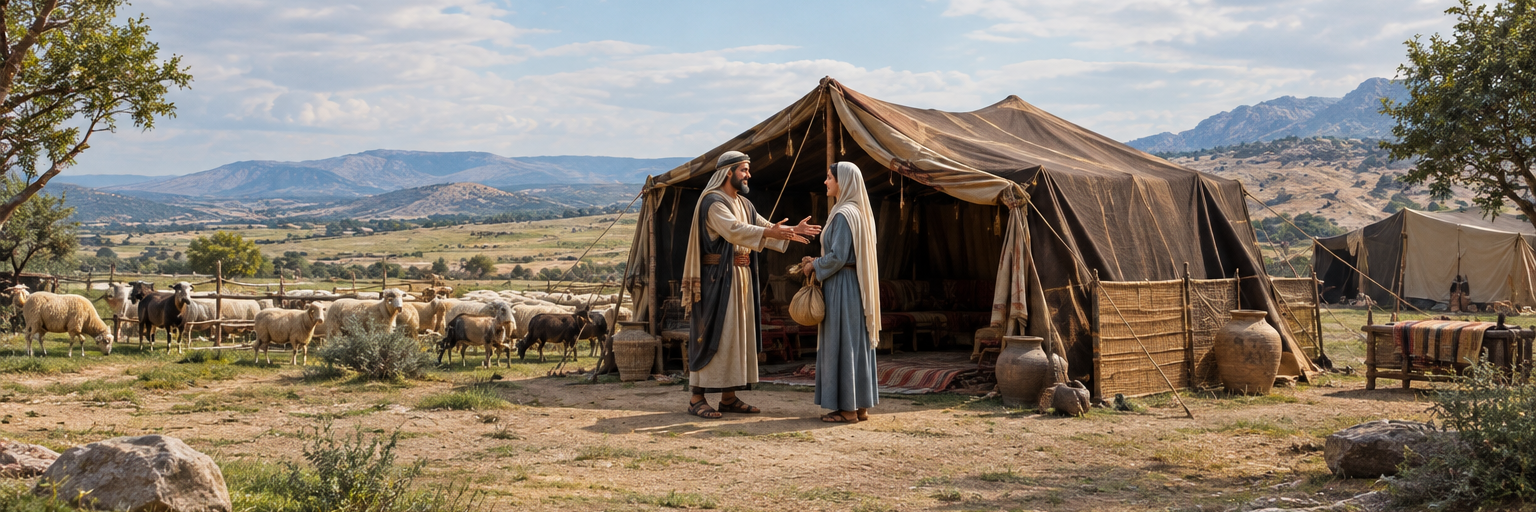
Jacob’s journey to Haran is marked not only by family drama and long years of toil but also by a profound moment where God “opened” Rachel’s womb, allowing her to conceive Joseph. This simple phrase, “opened her womb,” invites us into a deeper reflection on divine sovereignty, as it hints at a powerful metaphor: God alone holds the keys to life’s most vital mysteries.
In Genesis 30:22, the Hebrew word used for “opened” can also be understood as “unlocked.” This subtle nuance suggests that Rachel’s womb was once locked, inaccessible, until God chose to release it. This idea led ancient Jewish sages to identify three sacred “keys” that God alone holds: the key of rain, the key of birth, and the key of resurrection. Each represents a domain where divine authority is absolute and unchallengeable.
The key of rain, for example, is vividly described in Deuteronomy 28:12, where God promises to unlock the heavens to give rain in its season, blessing the work of human hands. Jeremiah 14:22 underscores that no false gods can provide rain—only the Lord controls this essential provision. Zechariah 14:17 even foretells a future time when rain will be withheld as a consequence for disobedience, illustrating God’s sovereign control over nature.
The key of birth, as seen in Rachel’s story and others like Sarah and Hannah, highlights that life itself is a divine gift. God “locks” and “unlocks” wombs according to His perfect timing and purpose. This understanding elevates the miracle of birth beyond biology to a sacred act of God’s will. Psalm 139:13–14 beautifully affirms that each person is fearfully and wonderfully made, known intimately by God even before birth.
Finally, the key of resurrection, power over life and death, is proclaimed in Ezekiel 37:5–6 and Deuteronomy 32:39, where God declares, “I put to death and I make alive.” This ultimate authority is foreshadowed in the prophets and fulfilled in the hope of resurrection, a promise that life triumphs over death by God’s hand.
While God alone holds these keys, the biblical narrative also shows moments when He entrusts agents—like Elijah or the apostles—to act in His name, demonstrating His power through them. Jesus, the Messiah, embodies these keys fully, calming storms, raising the dead, and providing abundantly, revealing God’s kingdom breaking into our world.
For us today, recognising that God holds these keys invites a profound trust in His sovereign care. Whether facing the uncertainty of life, the unpredictability of nature, or the mystery of death, we can rest in the knowledge that the Creator who unlocks wombs, opens the heavens, and conquers the grave is intimately involved in our lives. This truth encourages us to pray boldly, live faithfully, and walk confidently, knowing we are never outside the reach of God’s mighty hand.
In a world often marked by unpredictability and loss, the image of God holding these divine keys offers a hopeful anchor. It reminds us that life’s deepest locks are not barriers but invitations to trust the One who alone can open them.